
Badrinath Yatra 2026 —
Your Complete Pilgrimage Guide
Temple opens April 23. Darshan timings, how to get your free Yatra e-pass, a 4-day itinerary from Delhi, real budget numbers in ₹, and everything a first-time pilgrim needs to know.
Home › Travel Guides › Badrinath Yatra 2026
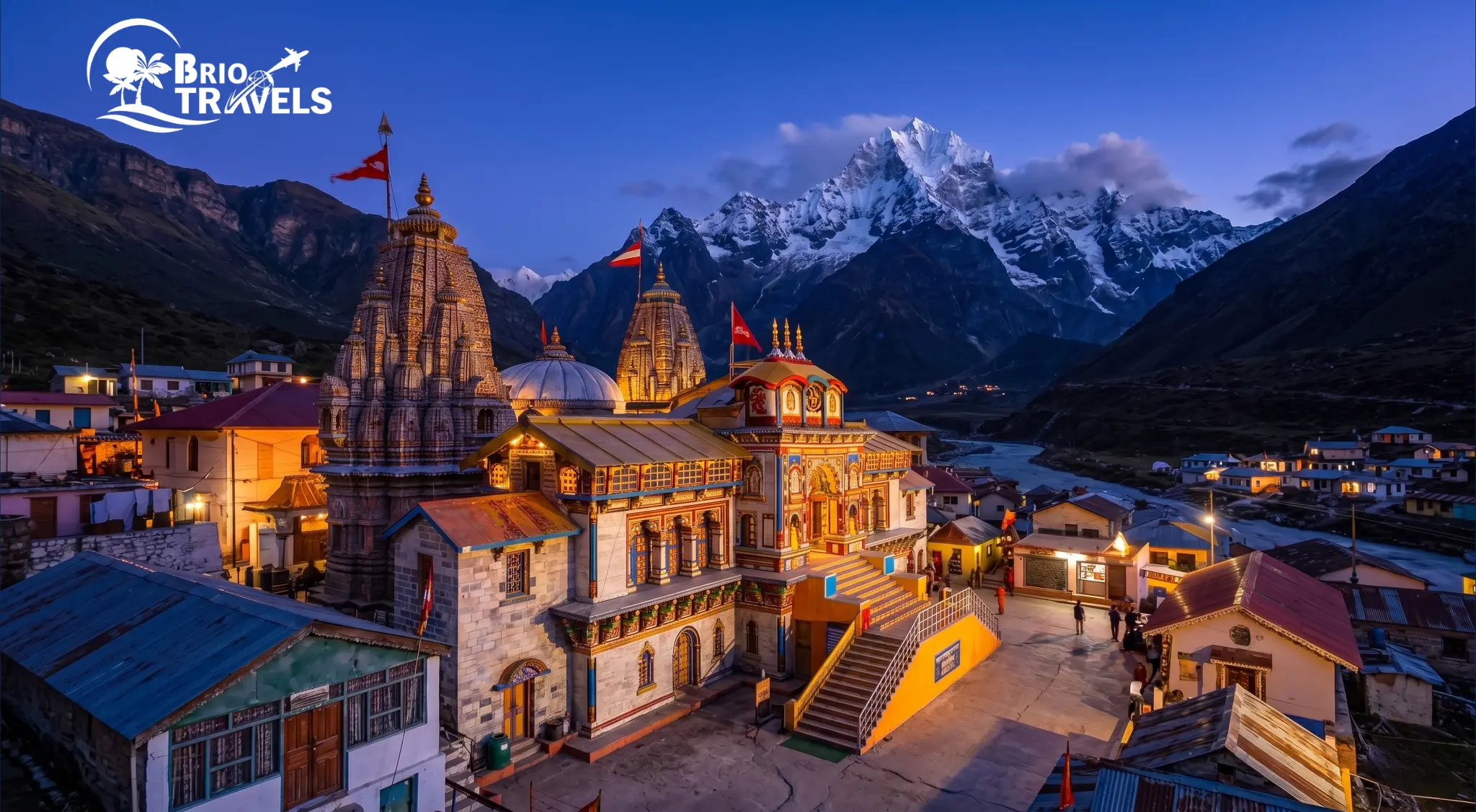
I still remember the moment the temple came into view. Hours on a winding Himalayan road — fog rolling in from the peaks, prayer flags fluttering in the cold air — and then, suddenly, the gold-tipped shikhara of Badrinath Temple glinting against the grey sky. No photograph had ever prepared me for that feeling. Nothing can.
If you’re planning your Badrinath Yatra in 2026, you’ve come to the right place. This isn’t a generic travel list. It’s everything I wish someone had told me before I went — the practical details, the spiritual context, and the logistics that actually matter — all in one place, with accurate 2026 data.
Some journeys change you. Badrinath doesn’t just change you — it reminds you of who you already are.
One major update in 2026: Char Dham Yatra registration is strictly mandatory, and cameras and phones are now banned inside the temple premises. We cover both — plus the darshan timings, budget, and best itinerary — in full detail below.
Section 01
Badrinath 2026 — Key Facts at a Glance
|
🗓️ Opening & Closing Dates
|
🕐 Darshan Timings 2026
|
||||||||||||||||||||
|
📋 Yatra Registration 2026 MANDATORY Online registration is free at registrationandtouristcare.uk.gov.in. Opens from March 6, 2026. You receive a QR-coded Yatra e-pass. |
🌦️ Best Time to Visit Badrinath May – June: Peak season, warm, but crowded. Book well in advance. |
Section 02
How to Reach Badrinath — Air, Train & Road
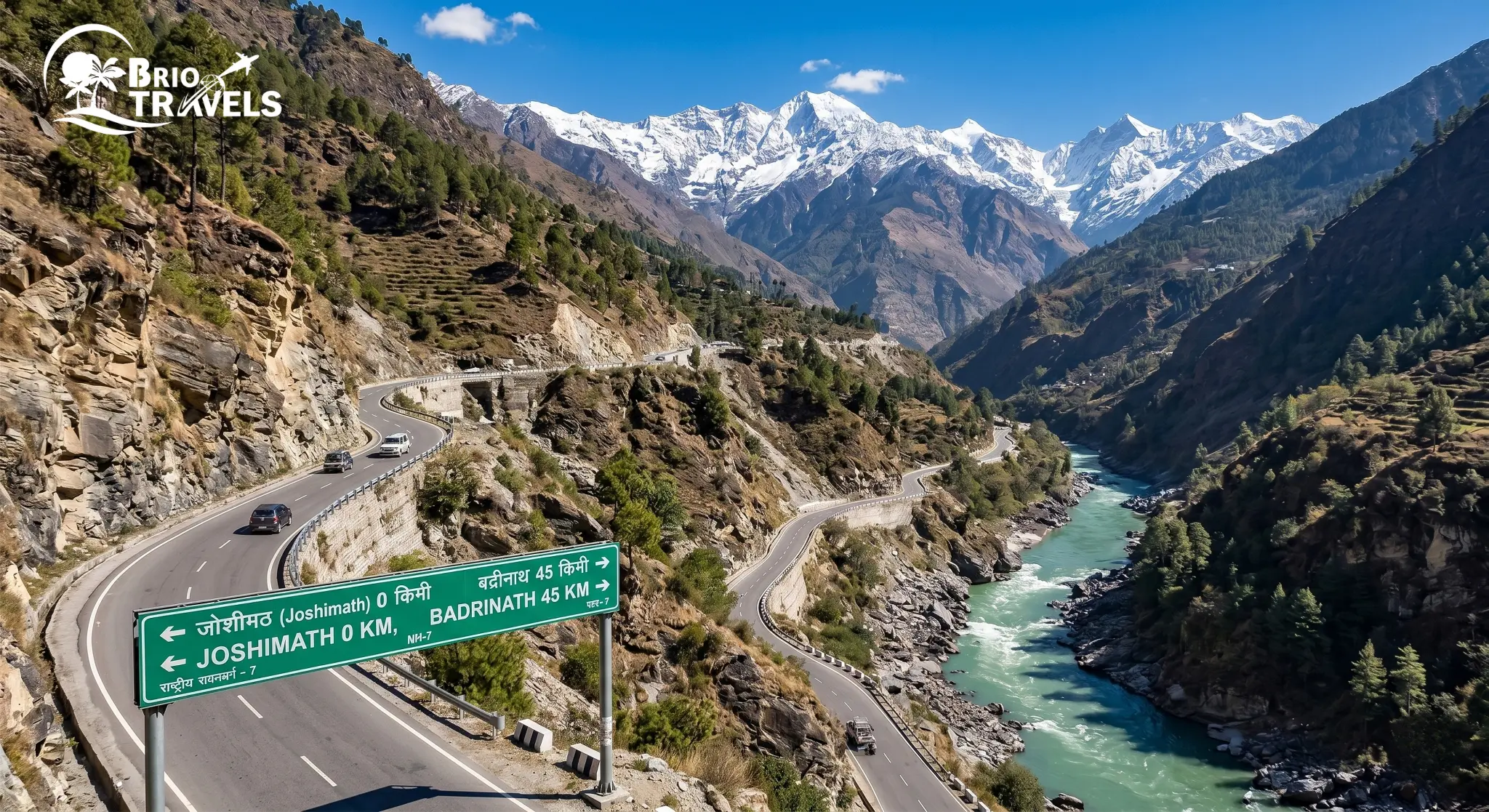
Unlike Kedarnath, which demands a 16 km trek, Badrinath is accessible directly by road to the temple gates — making it the most accessible of the four Char Dhams, especially for senior citizens and families. The road journey from Delhi follows NH-58 through some of the most sacred river confluences in India.
By Air (Fastest): Jolly Grant Airport, Dehradun is the nearest airport, ~317 km from Badrinath. Taxis and shared cabs make the 10–12 hour journey. Helicopter packages from Sahastradhara Helipad, Dehradun cost ₹80,000–₹1,50,000 per person — ideal for elderly pilgrims or those on tight schedules.
By Train (Most Comfortable Start): Haridwar Junction (~324 km) and Rishikesh (~297 km) are the nearest railheads, both well-connected from Delhi, Mumbai, and major Indian cities. From Rishikesh, shared buses to Badrinath cost ₹600–₹800; private cabs run ₹8,000–₹10,000 for a round trip.
By Road from Delhi (~525 km): Budget 14–16 hours. Route: Delhi → Haridwar → Rishikesh → Devprayag → Rudraprayag → Karnaprayag → Joshimath → Badrinath. The drive through the five sacred Prayags is part of the pilgrimage itself. Night driving on NH-58 is banned between 7 PM and 5 AM — plan accordingly.
📋 How to Get Your Free Yatra E-Pass (Step-by-Step)
Step 1 — Online (Easiest): Visit registrationandtouristcare.uk.gov.in → click Register → enter your Aadhaar number and mobile → select Badrinath + travel date → upload ID → download your QR-coded e-pass. Free of cost.
Step 2 — App: Download the Tourist Care Uttarakhand app on Android or iOS. Or WhatsApp: type “Yatra” to 8394833833.
Offline Counters: Haridwar (20 counters), Rishikesh (30 counters), Joshimath and Pandukeshwar. Bring Aadhaar and one photocopy.
Carry both a printed and digital copy. Your e-pass is scanned at checkpoints — without it, you cannot proceed beyond Joshimath.
Section 03
The Spiritual Experience — What to Expect at Badrinath Temple
Here’s what no travel guide tells you: the queue is part of the experience. Standing shoulder-to-shoulder with thousands of pilgrims from every corner of India — hearing prayers in Bengali, Tamil, Gujarati, Punjabi all at once — you feel part of something ancient and vast. That feeling doesn’t come from a photograph. It comes from being there.
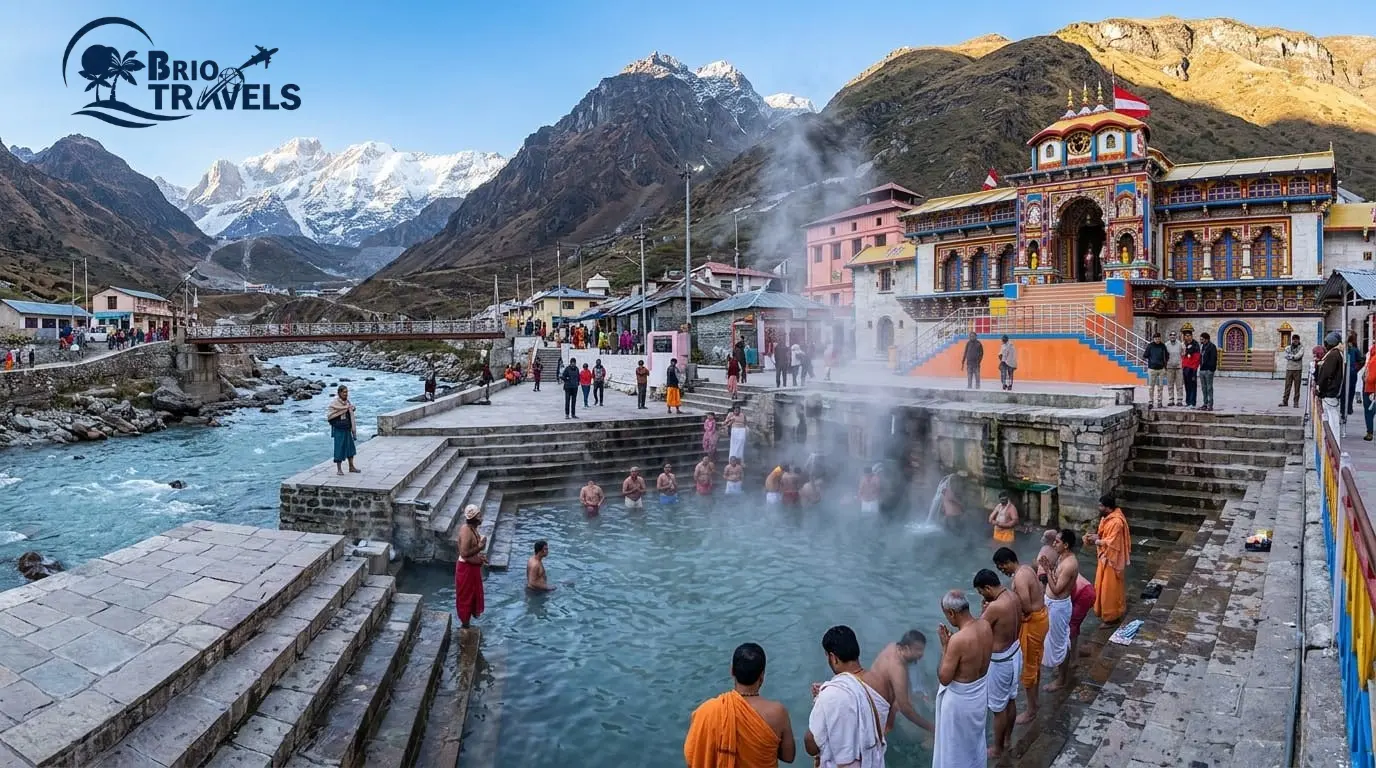
Before entering the temple, every pilgrim takes a dip in Tapt Kund — a natural hot spring just outside the entrance. Despite air temperatures that hover near 5–10°C even in May, the spring water stays naturally warm. It is considered a ritual of purification before darshan, not merely a tradition. Go in.
Inside the sanctum, the idol of Lord Vishnu is one metre tall, carved from black Shaligram stone in a meditative padmasana posture. This is called Swayambhu — self-manifested, not sculpted by human hands. Phones and cameras are banned inside temple premises in 2026. That is, honestly, a gift — it forces you to actually see it, not frame it.
🔔 Badrinath Darshan & Aarti Schedule 2026
| Time | Ritual / Session | Notes |
|---|---|---|
| 4:30 AM | Maha Abhishek (VIP Puja) | Booked at badri-kedar.gov.in — ₹4,700/person |
| 4:30 AM – 1:00 PM | Morning Darshan | Best window: 7 AM–12 PM to avoid queues |
| 1:00 PM – 4:00 PM | Temple Closed | Bhog & rituals — visit Mana Village during this time |
| 4:00 PM – 9:00 PM | Evening Darshan | Plan to attend the Kapoor Aarti at closing |
| 8:30 PM | Shayan Aarti | The unmissable closing ceremony — deeply moving |
The evening Kapoor Aarti is in a category of its own. As camphor lamps are lit and waved before the idol, the chanting builds in waves, the cold Himalayan air fills with smoke and sacred sound, and the entire valley seems to hold breath. Make absolutely sure you attend it.
Section 04
Beyond the Temple — Places Near Badrinath Not to Miss
Badrinath town is small and the temple is central, but the surrounding landscape is extraordinary — mythologically layered, physically stunning, and largely crowd-free compared to the temple itself.
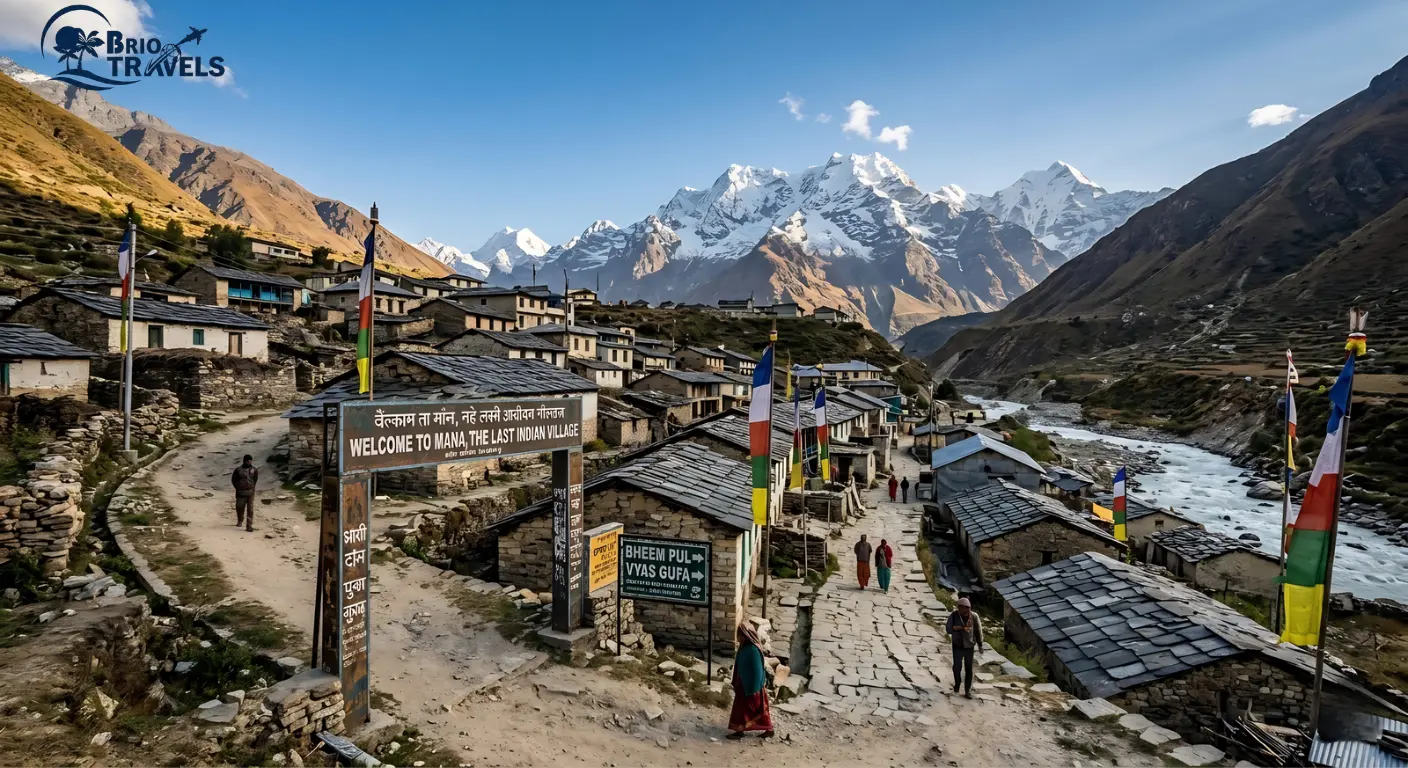
Mana Village (3 km from temple): Officially “India’s First Village” — the last inhabited settlement before the Tibet border. Here you’ll find yak butter tea, traditional stone homes, and the confluence of the Saraswati River with the Alaknanda. The Vyas Gufa and Ganesh Gufa caves are where Sage Vyasa is believed to have dictated the Mahabharata to Lord Ganesha. Walk the caves. Sit quietly. They are genuinely profound.
Vasudhara Falls (5 km trek from Mana Village): A 400-foot waterfall that drops straight off a cliff face. Local belief holds that the water falls only on the pure-hearted. Go early morning for the best light. The trek is moderate and manageable for most pilgrims.
Bhim Pul: A giant natural rock bridge believed to have been placed by Bhima during the Pandavas’ ascent to heaven. Brahma Kapal, on the Alaknanda banks, is where ancestral Pind Daan rituals are performed — significant for Hindus completing the Char Dham circuit.
Section 05
4-Day Badrinath Itinerary from Delhi (2026)
Overnight to the Gateway of the Himalayas
Take an overnight train from Delhi to Haridwar (Shatabdi, Jan Shatabdi or Sampark Kranti — book 30+ days ahead for peak season). Arrive morning, check in, and rest. In the evening, attend the Ganga Aarti at Har Ki Pauri — floating diyas, synchronized chanting, the Ganga in full flow. A luminous way to begin any pilgrimage.
Through the Sacred Prayags — Acclimatization Night
Depart by 6 AM. Drive through Devprayag (Alaknanda meets Bhagirathi), Rudraprayag (Alaknanda meets Mandakini), and Karnaprayag. Arrive Joshimath by evening. Stay overnight here — this is non-negotiable. Joshimath at 1,890 m gives your body one night to adjust before ascending to 3,133 m. Skipping this causes altitude sickness.
Darshan Day — The Heart of the Pilgrimage
Depart by 5:30 AM. Reach Badrinath by 7:30 AM. Take your dip in Tapt Kund, then join morning darshan. Plan morning darshan 7 AM–12 PM — less crowded than peak temple hours. The 1–4 PM break is perfect for walking to Mana Village — Vyas Gufa, Bhim Pul, yak butter chai. Return by 4 PM for evening darshan and Shayan Aarti at 8:30 PM. Stay overnight in Badrinath.
One Last Darshan — Then the Long Road Home
Early darshan at 4:30–6:30 AM if energy allows. Take a final walk along the Alaknanda. Depart by 7 AM — the road home takes 14–16 hours with stops. The mountains will stay with you far longer than the drive. Alternatively, break the return at Rishikesh for a final night before catching your train or flight.
Section 06
Badrinath Trip Cost from Delhi — Budget Breakdown 2026 (₹)
| Category | Budget (₹/person) | Mid-Range (₹/person) | Notes |
|---|---|---|---|
| Delhi–Haridwar TrainBoth ways | ₹400–800 | ₹1,200–2,000 | Sleeper vs AC. Book 30+ days ahead for peak season. |
| Haridwar to BadrinathReturn road transport | ₹1,200–1,600 | ₹4,000–6,000 | Shared bus/cab vs private Innova. |
| Accommodation (3 nights)Per person, twin sharing | ₹1,500–3,000 | ₹5,000–10,000 | Dharamshalas ₹500–800/night. Guesthouses ₹1,200–2,500. |
| Food (4 days) | ₹1,200–2,000 | ₹3,000–5,000 | Local dhabas ₹50–150/meal. Strictly vegetarian area. |
| Yatra Registration | ₹0 (Free) | ₹0 (Free) | Do NOT pay any agent. Official portal is free. |
| Temple Darshan | ₹0 (Free) | ₹1,100–4,700 | Regular darshan free. VIP Maha Abhishek ₹4,700. |
| Local SightseeingMana Village, Vasudhara etc. | ₹200–500 | ₹500–1,000 | Most attractions are free. Parking ₹50–100/day. |
| Misc (medicines, buffer) | ₹1,000–2,000 | ₹2,000–4,000 | Always carry cash — UPI unreliable beyond Joshimath. |
| TOTAL (Per Person, 4 Days) | ~₹5,500–10,000 | ~₹17,000–28,000 | Helicopter adds ₹80,000–1,50,000/person |
Section 07
Practical Tips — The Stuff That Actually Matters
🏔️
Acclimatize in JoshimathOne night at 1,890 m before ascending to 3,133 m is non-negotiable. Altitude sickness — headaches, nausea, breathlessness — is real and hits fast. Don’t skip it to save time. |
📱
No Phones Inside Temple — 2026 RuleCameras and mobile phones are banned inside Badrinath Temple premises from 2026 onward. Token collection points are available nearby. Guards enforce this without exception. |
🧥
Pack Layers, Not BulkTemperatures drop sharply after sunset even in May. Pack thermals, a windproof jacket, and warm socks. Bring SPF 50+ sunscreen too — high altitude UV is intense. |
💵
Carry Enough CashJio and Airtel work in Badrinath town, but UPI and digital payments fail frequently beyond Joshimath. Dharamshalas and Mana Village stalls are cash-only. Withdraw before Haridwar. |
🏥
Medical Clearance if Over 55A medical check-up is mandatory in 2026 for pilgrims above 55 or with heart disease, asthma, diabetes or hypertension. Get a doctor’s certificate before travel. |
🌿
Plastic-Free ZoneThe Uttarakhand government has banned single-use plastics in Badrinath township in 2026. Carry a reusable water bottle. The “Plastic Back” program gives refunds for returned bottles. |
Section 08
Frequently Asked Questions — Badrinath Yatra 2026
“Not every journey is a pilgrimage. But some pilgrimages become the journey of a lifetime.”
Published: April 28, 2026 · Author: Brio Travels Editorial Team
Temple dates, darshan timings and registration requirements verified against Uttarakhand Char Dham Devasthanam Board as of April 2026.
Always verify at registrationandtouristcare.uk.gov.in before booking travel.